
In today’s increasingly interconnected world, globalisation is unavoidable. This extends far beyond the spread of cultural offerings such as K-pop and anime, to the movement of goods and exports across international borders. As highlighted previously, wooden pallets remain the leading storage and shipping solution thanks to their durability, cost-effectiveness and strength (read more about – The Role of Wooden Pallets in Modern Supply Chain Logistics) For this reason, having a clear understanding of pallet sizes and standards across different regions is essential for smooth and efficient international trade.
Standard Pallets Across Different Regions
A standard pallet refers to a commonly adopted size and construction guideline that ensures goods can move seamlessly across warehouses, transport systems and shipping containers. Standardisation matters because it guarantees compatibility with handling equipment, maximises space in warehouses and containers, and safeguards goods by adhering to recognised load capacities.
On a global level, the ISO 6780 standard defines six internationally recognised pallet sizes including the 1219 × 1016 millimetre pallet used in North America, the 1000 × 1200 millimetre pallet found in Europe and Asia, and the 800 × 1200 millimetre Euro pallet. Square versions such as the 1067 × 1067, 1100 × 1100, and the 1165 × 1165 millimetre sizes serve specialised needs in regions including Asia and Australia. These pallets typically support loads of between 1,000 and 1,500 kilograms, depending on construction.
In Europe, the Euro pallet (EPAL) is the standard, with the EUR 1 size (800 × 1200 millimetres) being the most widely used. It carries up to 1,500 kilograms safely and is central to the European Pallet Pool, which ensures compatibility across transport networks. Larger variants such as EUR 2 (1200 × 1000 millimetres) and EUR 3 (1000 × 1200 millimetres) are also common for bulkier shipments.
North America primarily uses the GMA pallet, which measures 48 × 40 inches (1219 × 1016 millimetres). Known as the workhorse of the supply chain, it is most common in the food and consumer goods industries and can support static loads of more than 2,000 kilograms. Other sizes, such as 42 × 42 and 48 × 48 inches, are also in circulation for sector-specific use.
In Australia, the standard is the 1165 × 1165 millimetre square pallet, designed for local rail and warehousing systems. It is particularly robust, with hardwood versions capable of holding over two tonnes. However, because it does not always fit neatly into ISO containers, the 1100 × 1100 millimetre pallet is often preferred for international export.
Across Asia, especially in Japan and Korea, the 1100 × 1100 millimetre pallet is the most widely adopted, offering a practical square design for dense urban warehousing and container shipping. The 1000 × 1200 millimetre pallet is also popular, ensuring alignment with global ISO standards.
How To Choose The Right Pallet Size For Your Shipping Needs
Selecting the correct export pallets depends on several factors: the destination market, the type of product and the weight of the load. Aligning shipments with the appropriate standard ensures that goods can be transported and received without issue. Failure to use shipping pallets that meet international or regional standards can result in shipments being delayed or even declined at the point of entry. Such setbacks not only create additional costs but can also damage business relationships and timelines.
Choosing the right shipping pallet and export pallet size and standard not only prevents costly errors, but also brings tangible benefits. These include reduced product returns due to fewer handling issues, better utilisation of space during transport, smoother customs clearance and easier handling across multiple points in the supply chain. Each of these advantages strengthens efficiency and reliability in international trade.
The Importance Of ISPM 15 Compliance In Global Shipping
In addition to size and load standards, businesses involved in exporting wooden pallets must also meet ISPM 15 compliance. ISPM 15 or the International Standards for Phytosanitary Measures No. 15, is a regulation developed by the International Plant Protection Convention (IPPC) to prevent the spread of pests and diseases through wood packaging materials.
Compliance is achieved primarily through heat treatment or, less commonly, methyl bromide fumigation. Heat treatment involves heating the wood to a minimum core temperature of 56°C for at least 30 minutes, effectively eliminating harmful organisms. Once treated, pallets must be stamped with the internationally recognised IPPC mark, which includes the country code, the treatment method and the certifying body’s licence number. This stamp is the only recognised proof that the pallet meets ISPM 15 standards.
Ensuring compliance is not optional. Pallets that do not bear the proper ISPM 15 stamp are at risk of being rejected or destroyed at the border.
Custom Pallets For Non-standard Or Industry-specific Cargo
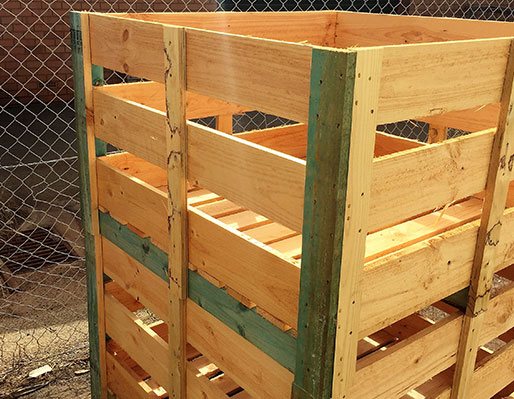
While standard pallets serve the majority of global shipping needs, a one-size-fits-all approach does not always work. Wooden pallets manufacturers understand that different industries have unique requirements – goods for sectors such as mining and heavy manufacturing differ greatly from those in fashion, food or beverages. Oversized equipment, fragile materials or unusually shaped items may demand custom-built pallets to ensure both safety and efficiency.
Custom wooden pallets manufacturers produce custom pallets that are designed to match the dimensions, weight distribution and handling needs of specific products. This tailored approach reduces the risk of damage, improves load stability and streamlines warehouse operations by ensuring goods can be moved and stored without compromise.
This is where Australian Boxes & Cases (ABC Crates) comes in. With a proven track record in designing and manufacturing pallets for diverse industries, we work closely with businesses to create solutions that meet both international standards and unique operational needs.
ABC Crates: Your Partner In Pallet Shipping Solutions
In a world where trade networks span every continent, pallets remain the silent backbone of logistics. From ISO-recognised sizes to region-specific standards, choosing the right pallet ensures that goods move seamlessly across borders while reducing risks and costs. Factoring in ISPM 15 compliance further safeguards shipments from quarantine delays, while custom pallets offer tailored solutions for industries where standard sizes simply do not fit.
At ABC Crates, we understand that every shipment is different and we are committed to providing pallet solutions that keep your goods safe, compliant and cost-effective. Whether your priority is international compatibility, regulatory approval or industry-specific design, our team is here to help.
Contact us today to discuss how we can support your logistics needs with the right pallet solutions for your business.
Related News

Wooden Pallets for the Oil and Gas Industry
Logistics is an inevitable part of every industry, with...
Keep Reading
The Role of Wooden Pallets in Modern Supply Chain Logistics
Whether it is packaged food, electronics or clothing, the...
Keep Reading
4 Reasons Custom Wooden Crates Can Transform Manufacturing
When it comes to manufacturing, efficiency, durability, precision and...
Keep Reading Enquire Today